


Granted the US played well however, faced against a better rival like Ghana, lost. The US team has definitely come a long way but the question remains: "when will the US be a better team?" A question which will only be answered with time. Hopefully the lose towards Ghana will serve as a reference from which the US team can improve.
I am however very proud of the US soccer teams efforts in the World Cup and their dedication, and I look forward to the future of US soccer. Next World Cup will be better and I think we can expect to see great things from the US.
Until then I leave the US National Soccer team with this song by Hector Lavoe called "Todo Tiene Su Final"


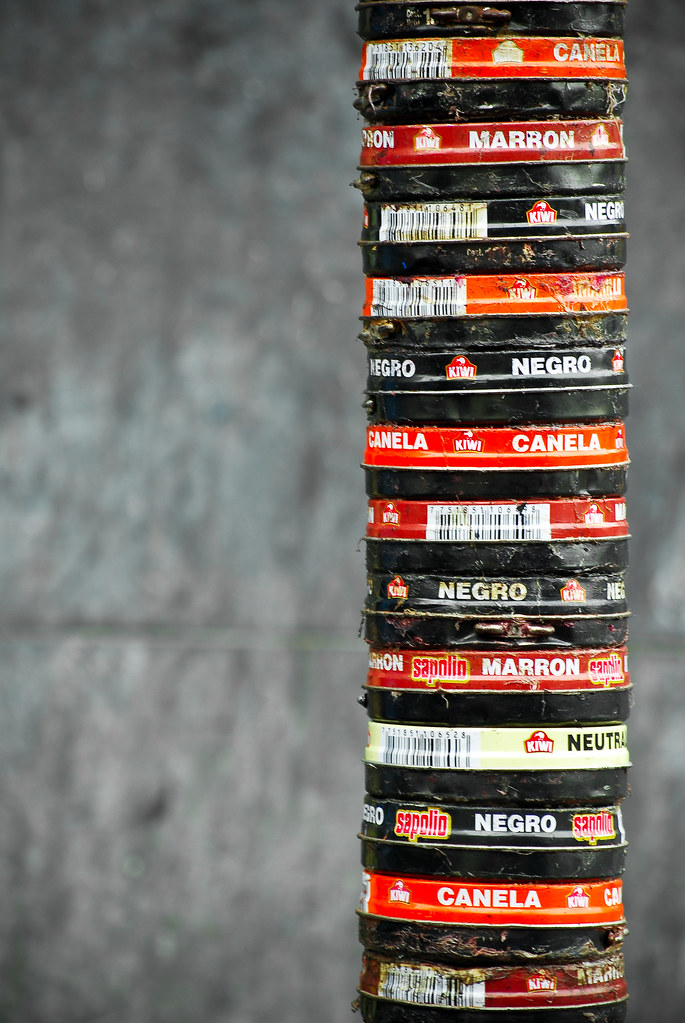
Living in Lima as a photographer, not to mention working in Lima as a teacher has given me the opportunity to travel all over this monstrous metropolis and one thing I run into more often than not are shoe-shiners. Once a job only held by young children as a summer gig or on the side to earn a bit of money, now is operated by men of all ages. A job that used to be common in the US several decades ago has all but vanished from the street scene (shoe-shiners can be still found in some of the larger cities like LA), but shoeshine boys remain a common site in many countries all over the world. In the US most remaining shoeshine businesses have been moved indoors and off the streets as cities have worked to reduce the number of street vendors in an effort to maintain the aesthetic appeal of their city streets, a task which has been nearly an uphill battle for municipal authorities in Lima. An article written by the SFGate.com highlights the success of one homeless shoe-shiner who fell under opposition by the Department of Public Works who has shut down his operations until he can purchase a permit. In Peru the shoeshine boy is often looked down upon by society, even more so when it isn't a child working the position. While the job doesn't bring in a suitable salary for some it is more than enough to put food on the table for their families. Interestingly enough some of Latin America's most well known and respected politicians and presidents like Peru's very own former president Alejandro Toledo. The US also has a few politicians, musicians, and historical figures who also took up the trade when they were young. Wikipedia has a short article on shoe-shiners which has the a list of famous people who have once held the position.
In Lima the shoe-shiner can be found virtually anywhere in the city but tends to be more concentrated in places like Downtown Lima/city center, Miraflores, San Isidro, and Callao. When it comes to such a profession the one thing that matters the most is location, location, location, and these guys pick the most populated and trafficked areas in the city to set up shop. In many countries like the US and India permits are required for shoe-shiners to operate and in Lima some larger shiners operate under a license/permit from the city especially since their large booths tend to take up a lot of space and aren't as mobile as the smaller compact shoeshine box that others lug around all day.
However you measure up the work of a shoeshine boy it is hard to ignore their iconic roll in the culture of cities everywhere. It will definitely be a long time before the shoe-shiner becomes extinct as their niche in the urban market remains strong. Where their is a need there is a customer, and in a desert central city like Lima the demand is high!
While walking along Jiron de la Union (in downtown Lima) with Zdenka, we passed the famous Casa de Higgins (house of Higgins). The main wooden doors were open and a sign stating "free entrance" hung above, inside was the magnificent house was an exhibit dedicated to the famous journalist Doris Gibson (28 April 1910–23 August 2008). She was also the founder and editor of the popular weekly news magazine Caretas.


Below is a excerpt from Quinoa Films website that gives more information about the incident, also they have managed to complete a subtitled trailer of the film which can be found below.
"
This is an independent documentary about a group of journalists, who became part of their own story when they were murdered in 1983 in Uchuraccay, a remote hamlet in the Andes of Peru, as they were investigating rumors of extrajudicial killing by the military. It took place in the midst of violent warfare between the Shining Path, a Maoist guerrilla organization, and government forces.
The killings of eight journalists, all of them from opposition newspapers, might have been just another unfortunate event caused by the violence that consumed the Andean region during those years. Yet their deaths were followed by significant irregularities in the legal process. Most of the suspects were never arrested, and according to legal records, the military authorities in the area, led by Army General Clemente Noel, did not cooperate with Judge Juan Flores, the investigator assigned to the case.
Most witnesses in Uchuraccay died in mysterious circumstances, and the remaining villagers escaped to nearby areas, leaving behind a ghost town.
A government investigative commission concluded that the journalists were killed by the villagers of Uchuraccay, who took them for terrorists, mistaking their cameras for rifles.
The story took a different turn three months later, with the discovery of a bag belonging to Willy Retto, which contained a camera with some revealing pictures of the moment when the journalists arrived in the town and spoke with the local villagers. The fact that three of the journalists spoke Quechua, and therefore could communicate with the locals who could not speak Spanish, challenged the official theory of mistaken identity.
Some witnesses stated that the journalists were incarcerated in the communal house, and killed after midnight. Yet those witnesses also died in suspicious circumstances.
Three local men were convicted to six years in prison. Although the case was never closed, it has been kept for the last twenty years as confidential.
The purpose of this documentary is to tell the story and help the families to request the reopening of the case. This story honors journalists killed all over the world in the line of duty with contemporary relevance, as the Iraq war and other conflicts worldwide have left scores of journalists killed in recent years.
Bringing the killers to justice will contribute to put an end to years of impunity in Peru. Many other cases of killings in neighboring areas have been reopened and those responsible have been convicted. The killings of Uchuraccay should not be the exception."


Here is the video trailer from their website, and for those who can read Spanish it might interest you to read this pdf document that was put together by the NPO Truth and Reconciliation about the murders at Uchuraccay :
I have also include some other documentaries that talke about the incident but they are in Spanish:

 One example of Peru's culinary success is owed in part to the famous Chef Gastón Acurio, a chef who has managed to take Peruvian cuisine to an international level, with several restaurants in countries like: Mexico, Colombia, Spain, USA, Panama, Chile, Ecuador, and Venezuela. Aside from his several restaurants Chef Acurio also hosts a popular food show on Peruvian TV which airs weekly and runs his very own culinary institute.
Saveur, a popular food and wine website and magazine has recently written an article that dissects the urban food cart vendor's of Lima and highlights one of Lima's most famous anticuchera's Grimanesa Vargas Araujo, more famously recognized as La Tia Grima. La Tia Grima's highly demanded anticuchos or marinated beef hearts have won over the stomachs of many Limeños from all walks of life all of whom are content at waiting more than an hour to receive their order.
Below is a video review of Peruvian Chef Gastón Acurio's restaurant "La Mar", located in San Francisco. This video is in Spanish but it has English subtitles. The second video is of Chef Acurio preparing the popular Peruvian dish Cebiche.

Gone is any remote trace of summer, as people suit up in warm clothing and ditch the shorts and sandals. Along the coast all the large commercial billboards have been removed and put away until next year when they will be put back up to greet the thousands of Peruvians and tourists who drive up and down the Panamericana Sur highway visiting the popular beaches like Asia, Puerto Viejo, Punta Hermosa, and Leon Dormido. Gone are the street vending raspadilla (fruit flavored shaved ice cones) carts which seemed to innundate city with there delicious and refreshingly cool fruit flavors made from 100% all natural fruit pulp! No more beach parties or wild summer nights of drunken debauchery and Pisco induced Plan B mistakes. Probably the only thing I don´t miss about summer is the dread of having to ride in an old, rundown and dirty bus or micro, which turn passengers into living Limeños a la brasa (think Pollo a la Brasa)! Try siting in a heat-stroke inducing sweat bath for more than an hour in rush hour traffic all while cramped up with 30 to 40 other complete strangers all generating an equally proportionate amount of body heat and sweat. Add to this equation the collaborated body odor and the door man yelling at every one to move to the back when clearly there is no room as another wave of passengers attempt to break a Guiness World Record.
Among tourists traveling abroad to Peru there seems to be this misconception about Lima as a city similar to Los Angeles, a city that experiences a perpetual summer. Many are quite surprised when they travel to Lima only to discover the winter season that dominates close to half of the year, not something one would expect from a South American coastal city. Luckily for many travelers the winter is still rather tolerable thanks in part to the lack of rainfall (the worst one will experience is a light drizzle from time to time) Lima receives each year. In general, I would describe Lima's climate as being rather mild, despite being a city located in a coastal desert. Lima's winter usually sees average temperatures ranging from 12 °C (54 °F) to 20 °C (68 °F), which is rather manageable, especially if you come from the Pacific Northwest or any other region up north. July through September are by far the coldest and wettest months during the winter season.
Thursday, June 10, 2010
0
comments

For those who are new to living in Peru or living in Lima, having a limited knowledge of English can make such simple tasks as reading/watching the news rather difficult. How does a traveler and/or expat find out what is happening in Peru when websites like CNN or MSNBC don't really provide much coverage on the country (unless of course you're recently convicted Joran van der Sloot).
Well there is a solution to your news deficiency and for almost 100 years it has been known as Andean Air Mail & Peruvian Times. The Peruvian Times (for short) has been providing both Peruvians as well as the foreign community with an English language newspaper alternative for those who don't Habla Español. The famous English language newspaper began it's operations back in 1908 under the name of West Coast Leader and covered the unfolding day to day events in Peru. It wasn't til the 1940's that the West Coast Leader was forced to close up shop and move operations to a new location due to their support of the Allied Movement during the Second World War. This change prompted publisher C.N. Griffis to change the paper's name to Peruvian Times.
As the years rolled on Peru would see many regime changes and with these changes the Peruvian Times would face harsh opposition from the government for their coverage of controversial events. Media Silencing being an all to common practice in the days of the Velasco Era, however the Peruvian Times managed to hold firm their journalistic efforts in spite of such adversity and have evolved into the news company they are today.
With the growing popularity and simplicity of today's digital media the Peruvian Times has left behind the traditional news printing methods in favor of the convenience and wide user accessibility of the Internet, thus foreshadowing the need for manual typewriters and linotype machines. Though the medium has changed, their dedication to gathering and presenting the news remains.
If you are interested in learning more about the Peruvian Times history or you would like to read some of their great news coverage you can check out their website here: http://www.peruviantimes.com

Travel Photographer Tewfic El-sawy has posted on his blog, The Travel Photographer an article about an American photographer by the name of John Batdorff who has posted photos on his portfolio website from his recent trip to Peru.
Batdorff is the son of two avid American photographers, who worked in his families newspaper taking photos and would later hone his craft while in college. His work has been featured in the National Museum of Wildlife Art in Jackson Hole, Wyoming as well as several publications. He continues his develop his passion for art and photography through his travels.





