Join This Site

Photos of Peru

www.flickr.com
marcomendoza136's items Go to marcomendoza136's photostream

Labels

10 reasons you should never get a job (1) 2010 (1) 28 de julio (1) about me (1) abroad (1) addiction (1) adventure (1) afro-peruvian (7) aguas calientes (1) aji (1) alcohol (10) amazon (1) amazon river (2) america (2) andean (1) animal house (1) animation (14) anthony bourdain (1) architecture (1) argentina (1) arroz chaufa (1) art (6) articles (2) asuncion (1) attraction (2) Av. Abancay (1) Av. Grau (2) Av. Sucre (1) aviacion (1) B/W (1) bar (4) barranco (11) bars (6) beer (9) birthday (1) blogs (4) blood donation (1) blues (1) bodies (1) box (1) boxing (1) breasts (1) breña (7) brenden fraser (1) caldo de gallina (1) callao (7) camera (2) canon powershot (1) capitol (1) caqueta (2) cartoons (10) castañeda (1) castle (1) cat (1) catholic (1) causa (1) celebrity (1) centro comercial (1) cercado de lima (20) cerro san cristobal (1) ceviche (2) chan (1) chan chan (1) Chancay (1) channel frederator (1) charitable organization (1) Chase Jarvis (1) chicarron (1) chiclayo (2) chilcano de pisco (1) chile (1) chorrillos (14) chosica (2) christmas (3) church (1) churro (1) cliff (1) clinic (1) closeup (1) clubs (1) coca leaves (1) cocaine (1) colbert report (1) colectivo (1) comas (2) combi (2) commitment (1) consulate (1) cooking/baking (1) cops (1) country (3) crack (1) crema de rocoto (1) crime (2) criolla (2) criollo (3) cuisine (3) culture (21) cumbia (1) cusco (9) cuzco (3) d80 (1) dancing (3) daniel zamalloa (1) darwin (1) dead (1) death (1) dia de la cancion criolla (1) diego maradona (1) digg (1) digital camera (2) digital photography (34) doña pepa (1) downtown lima (20) drugs (2) DSLR (1) embassy (2) english (3) entertainment (2) eva ayllon (1) event (7) exhibit (2) experiment (1) family (1) fear (1) festival (1) FIFA (1) film (1) fires (1) Flickr (2) folklore (1) folkloric (3) food (24) football (1) fraternity (1) fresh cheese (1) friday (2) fried food (4) funny (1) futbol (2) gambling (1) gary allen (1) George Jones (1) gian marco (1) girlfriend (1) gold (1) government (1) guard (1) guest writer (5) guides (3) halloween (2) harrison ford (1) hematology (1) history (10) holiday (5) hospital (1) hotel (2) Huachipa (1) Huaylas (2) humor (2) Ica (1) incas (2) information (6) infrared (1) inspiration (2) internet (6) inti aperture (1) investigation (2) iquitos (1) iso (1) jazz (1) jesus (1) jesus maria (2) jiron de la union (2) Kanye West (1) karaoke (1) kina malpartida (1) king of pop (1) la libertad (1) la merced (1) la parada (1) la victoria (2) lambayeque (1) leoncio prado (1) life (1) lima (77) limon (1) Lince (3) los angeles (1) love (2) Machu Picchu (8) Magdalena del Mar (1) malvinas (1) marijuana (1) marriage (1) megaport project (1) mercado central (3) mercados (1) michael jackson (1) military (1) mining (1) miraflores (11) money (1) movie (2) mt. hood (1) mt. putucusi (1) music (16) musica (2) national anthem (1) news (28) night (1) nightlife (10) nightvision. flash (1) nikon (1) Obama (1) off-topic (48) oregon (7) Panamericana (2) papa a la huancaina (1) paraguay (1) party (7) patrick swayze (1) peña (2) peppers (1) peru (124) peruvian (3) peruvian food (24) peruvian music (2) Petit Thours (1) phi delta theta (2) photographer (16) photography (55) pisco (1) Plaza Bolognesi (2) Plaza de Armas (1) PNP (2) police officer (1) politics (4) pornography (1) portland (7) pro (1) psychology (1) pueblo libre (2) queso fresco (1) radio (2) random (72) rant (8) recipe (1) relationships (1) religion (2) repsol (1) resources (2) review (12) ricardo palma (1) rimac (2) rock (1) ruins (2) Rustica (2) salsa (1) san borja (1) san felipe (1) san isidro (3) San Juan de Lurigancho (1) san lorenzo island (1) San Martin (1) san martin de porres (3) santa anita (1) saturday morning cartoons (13) science (1) security (1) serenazgo (2) sex (2) shopping (1) shutter speed (1) siesta (1) sleepy (1) snacks (1) soccer (3) spain (1) sports (2) stained glass (1) stephen colbert (1) story (1) street vendor (1) streets (2) Tacna (1) taxi (2) technology (3) texas (1) theives (1) thunderbird (1) time exposure (1) time lapse video (4) tocosh (1) tourism (5) traffic (3) transportation (3) travel (20) travel guides (6) traveling (2) trees (1) tribute (1) tripod (1) trujillo (2) underconstruction (1) urban (1) uruguay (1) USA (4) uv (1) ventanilla (1) veterans day (1) via expresa (1) video (29) violinist (1) Voce (1) Washington DC (1) watchman (1) websites (2) white horse (2) woody harrelson (1) workin in peru (1) working in peru (2) world (1) world cup (1) yuquita (1) zambo cavero (1) zdenka (1)
Showing posts with label peruvian food. Show all posts

Easter Week in Lima, Peru

Posted by Marco Antonio Mendoza Thursday, April 21, 2011 1 comments

Today marked the first day of a long over due vacation (granted it's unpaid), with plans of nothing more to do than lying around the house watching movies and hanging out with my family.  In theory it seemed like a fail proof plan with little that could possibly get in the way, but boy was I wrong.  Yesterday, after having finished my last class for the week I headed off home as quickly as possible to meet up with the wife and child who had been eagerly awaiting my arrival.  Wednesday afternoon and evening were amazingly relaxing and it was nice to spend some much needed time with Rosemary, who seemed more than content with being carried around while she gazed up at here obscure yet vivid surroundings.


Night came and Zdenka and I (like a couple of medical residents) working in shifts took one our new routine of caring for Rosemary's needs.  A process that was not willfully excepted at first by my part and which had to endure the harsh assimilation of my duties.  Though a short time has passed since Rosemary has entered this world the night shift still remains difficult for those who covet sleep and like any other night we spent it waking up at odd yet synchronized hours to change diapers and feed the baby.  Everything up until 0400 hours was going well right to the moment where Rosemary out of nowhere let out a large shriek which quickly evolved into a loud (ear-piercing) and sharp cry, one which seemed to be unstoppable.  Now I'm new to this baby/fathering stuff so my experience at this point in handling such situations is as limited as a security guards during a bank robbery.  I look over at Zdenka who lies lifeless next to me, her attempts to play dead throughout the night has been interpreted as code for "your turn".  Realizing I am on my own I quickly pick up Rosemary who is flailing her little body like crazy, I employ my method of swaddling while walking around which seems to work at first until I make the premature move of placing her back in the crib before she is fully asleep, she cries again.

For the next five hours this would be the scene, where baby would cry, one of the parents would get up in their ogrish and drowsy state to pick up the baby, a comforting method would be executed, the baby would suspend crying (an enticing trap for the parents), parent would foolishly place the baby back in bed, said parent would quietly tip toe back in to bed where they would flop down lifelessly onto it, baby would resume crying shortly after, and rinse and repeat.  A stressful and daunting situation for the noob parents as tensions run high and the will of an adult is crushed leaving them crying pitifully in the corner while the rock themselves for comfort.  By the time the sun had risen both of us were exhausted and defeated as the baby who apparently could not be consoled continued her rain of terror.  Another hour went by and suddenly there was silence in the house, an almost eery silence that left us unsure what to do, terrified to trust our instinct and take advantage of the situation.  There she lied in her mothers arms, resting peacefully, like an angel she smiles and the tension is cut, Rosemary is gently placed in her crib and with no words exchanged both of us veered off into separate rooms to enjoy the comfort of a bed all to ourselves.

Not being able to sleep I managed to take a few photos with my camera and grabbed a quick peek of Zdenka curled in a ball under the covers of the bed in the next room, not even an earthquake could have pulled that woman out sleep.  After that rest became the decree of the day as everyone took to sleep in their own respected beds, so as not to disturb each other.  Hours went by and soon a refreshed family emerged with an insatiable hunger which was dealt with by visiting a local cevicheria just a few blocks down the street.


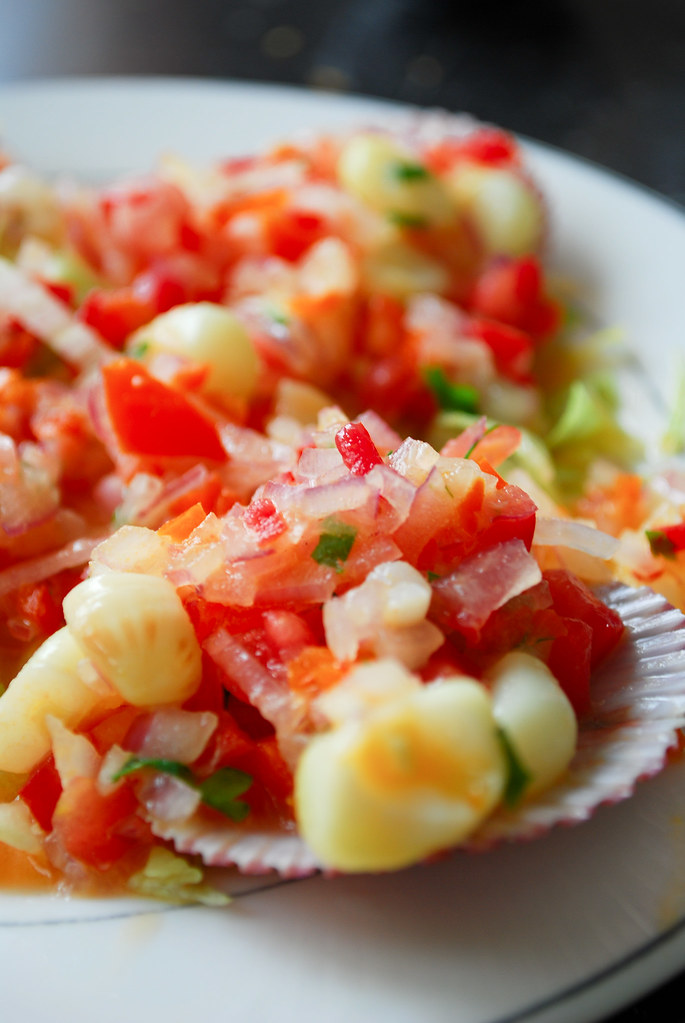
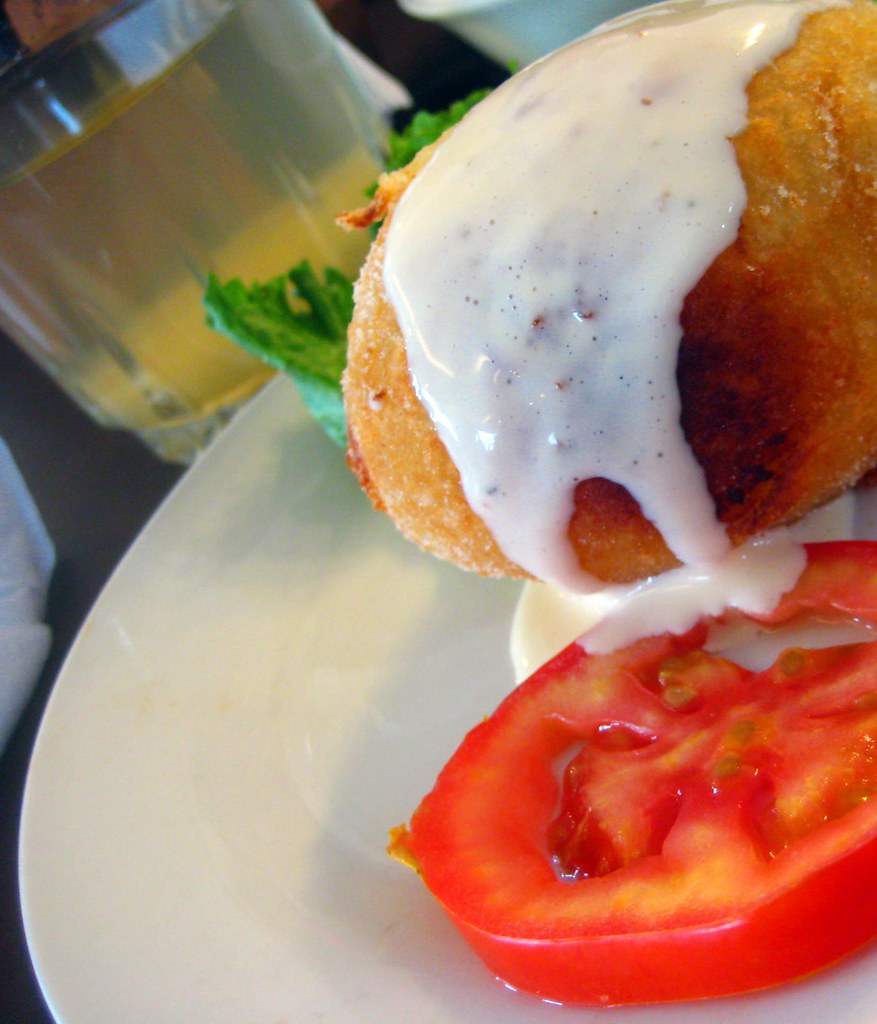
Being the holy week and all, fish was the preferred item for a late lunch and was well received.  The place we ate (of which I can't remember the name) had a wonderful open environment and great service but what really made it a winner was the high quality of the food.  We ordered two popular favorites one being Tiradito tres tiempos (a dish of thinly fileted fish cooked ceviche style and served under a blanket of three popular pepper sauces), and the other fried calamari.


The rest of the day has been rather relaxing and I am confident that last nights experience has definitely put some hair on both our chests in regards to child rearing.

Travelling South for Lima's Best Bread Ever!

Posted by Marco Antonio Mendoza Friday, September 24, 2010 0 comments

There is something relaxing about driving down the Panamericana Sur highway, a road divided by the mighty Pacific Ocean and the expansive sunbathed deserts of Peru's coast.  The southern coast is a drive that takes you towards some of Peru's most popular beaches where thousands upon thousands of Lima's city dwellers migrate to during the summer months. 


Does there exist a food worth driving an hour and a half for?  The answer is a definite HELL YEAH!  Head south towards the province of Cañete and you will see a medium sized chicken farm on your right hand side at about Km 52.  Here you will see a small straw covered kiosk accompanied by this small businesses prized gems, a trio of earth and clay made ovens.  The Tambo Rural as this unexpected roadside gastronomic landmark is called caters to many hungry travelers and road warriors making their journey's south.   What keeps people coming back is the Tambo Rural's famous and addictive artisan breads.  An intended light snack which ultimately ends up as a meal, these finger long breads (which have an appearance and flavor similar to Mediterranean bread, think Lebanese style flat bread) are filled with either Botija black olives (similar in taste to Greek Kalamata olives) or queso fresco, and are baked until golden.  Both bread fillings are guaranteed to satisfy the appetite of any individual.  


The robust aroma of baking bread that escapes from those dome shaped ovens has forever been impregnated in my mind and just to write about it causes me to drool uncontrollably over my keyboard.  Any road trip down south whether with friends or family now requires a pit stop to the Tambo Rural, a place which has made die hard fans of the skeptical.  The bread is always best eaten as soon as they are pulled from the oven with a little bit of the spicy rocoto sauce for that added kick.  I ate there last weekend and like always it didn't disappoint.  Below are the directions to this must visit ma and pa food site.  A definite 5 out of 5

Tambo Rural
Avicola Don Bruno SRL
Autopista Panamericana Sur
Km. 52 - Santa Maria del Mar

This Week in Peru Blogs

Posted by Marco Antonio Mendoza Wednesday, September 15, 2010 0 comments

I have been surfing the net lately checking up on some of my favorites blog sites that like Inti Aperture, also examine the daily rituals and cultural quirks of life in Peru.  I managed to pick out some of my favorite posts and decided to share them with you.

First up is a surprise post from blogger Barbara Drake who has been on an unofficial sabbatical from the blogosphere over the past few months.  She recently posted about an interesting Italian Trattoria which according to her article is perhaps one of the most authentic in Lima.  To make this discovery even better the prices appear to be fairly comfortable for this little tucked away restaurant in Surquillo.  Here is an excerpt from her blog:

"Nearly every large city in South America has at least one or two very good, if not excellent, Italian restaurants.   What every city does not have is an authentic Italian trattoria — a mid-priced, family-run restaurant that serves delicious, regional  dishes  in a casual, home-like setting.
Lima’s Trattoria Napoli does just that, serving up first-rate southern Italian fare in a sliver of a building tucked in no-frills Surquillo.  The trattoria is truly a family business:  The owner’s from Calabria (the toe of the boot), his wife keeps the tiramisu in the fridge next-door, and the ponytailed son-in-law can often be found munching on gnocchi with the grandkids at a nearby table.  The homey ambience embraces diners, too: Eat here and you feel like part of the family — welcomed and satisfied."

Next up are a few recently uploaded videos from the website La Habitacion de Henry Spencer, which has posted footage from this year's Mistura event.  For those of you who might not be familiar, Mistura is a gastronomic festival that celebrates and highlights the best in Peruvian cuisine while offering it's patrons to sample some of the best dishes prepared by famous chefs, street venders, and so forth.  Mistura may only have a few years running now but it has already managed to gain international acclaim and recognition.  Unfortunately, I was unable to attend this year but I did hear good things about it from friends who did go.  Anyways, the videos on this site are in SPANISH (sorry!) but they are still well worth a watch for anyone interested in seeing footage of this popular event.  Below is a sample video!


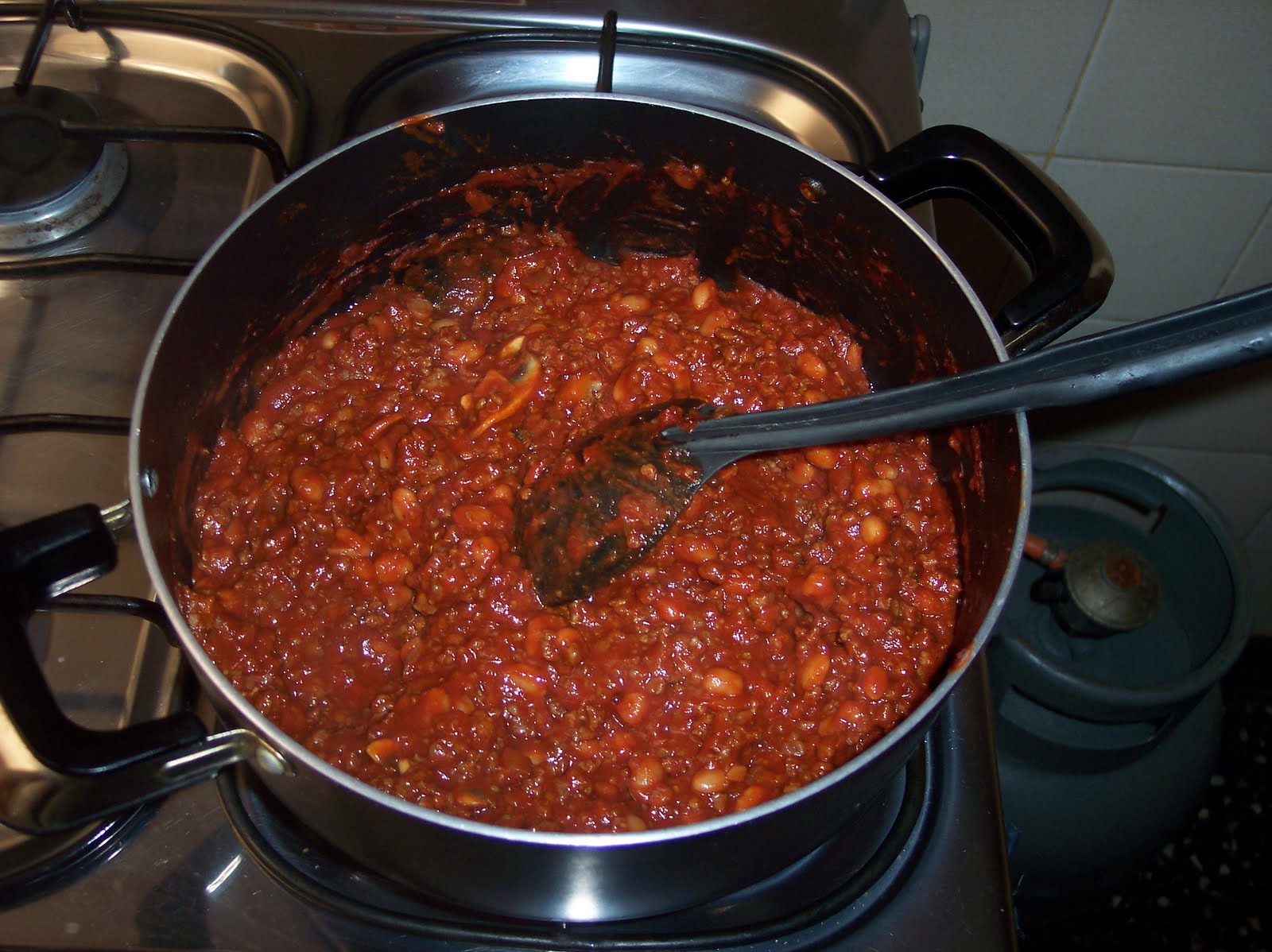
The Gringo of Chiclayo as he calls himself has been battling with his stomach's homesickness for good ole' fashion American food (I don't blame him, what I wouldn't give for a nice ribeye steak or a BBQ pulled pork sandwich w/ coleslaw).  What exactly did he do about it?  He decided enough was enough and he made CHILI!  Check out his page to see more details about how he went about recreating this southwestern American favorite. 

Great Chinese Food in Lima's Calle Capon

Posted by Marco Antonio Mendoza Tuesday, September 7, 2010 0 comments

Chinese food or "Chifa" ( the word is derived from 酒饭 chī fàn, or "eat meal" in Mandarin)as it's known by most Peruvians could be considered a cuisine epidemic, in that the restaurants are widespread throughout many coastal cities (not very common when you go to the sierra or the jungle).  Lima by far holds the record for most Chifas in Peru (more than 6,000 restaurants), with each district containing several usually with each restaurant only a few meters from the next.  Interestingly, the popularity of Chinese food in Peru could easily rival that of the US, with most Limeños eating Chifa about once or twice a week (sometimes more!).  I should probably clarify that Chifa is NOT solely Chinese food but a hybrid fusion of both Chinese and Peruvian cuisine. 


When did Chinese food arrive in Peru? The Chinese first arrived to Peru in the late 19th Century as contracted laborers to work in sugar cane plantations, guano mines along the coast, the development of Peru's early railroads, and in the Amazon working in mines and agriculture, in order to replace the slaves in order to facilitate the end of slavery and the beginning of free labor.  It wouldn't be until the beginning of the 20th century that non contract laborer Chinese would begin to migrate to Peru.  Most Chinese upon completing their contracts would then adopt Spanish surnames and establish small businesses as many chose to settle in Peru rather than return to a communist ruled China.  It was likely at this point in history that many Peruvians were first exposed to Chifa cuisine just as they were being exposed to Afro-Peruvian cuisine or Criollo

Calle Capón, Lima's Chinatown is one of the oldest established Chinatown's in the Western Hemisphere, while not necesarily the largest.  Today El Barrio Chino (AKA: Calle Capón) is a heavily frequented part of downtown Lima, especially due to it's close proximity to the Mercado Central of Lima and Mesa Redonda.  Calle Capón even has it's very own website where those interested can visit to learn more about what it offers. 

If traditional and authentic Chinese food is what you are looking for then the Wa Lok in Calle Capón or El Dragon Rojo in San Borja on Av. Aviación are well worth a visit (note that with Dragon Rojo you will have to ask for the legendary second menu).  The Wa Lok in Lima is recognized by many Limeños as the best Chinese restaurant.  At the Wa Lok you will find many classic Cantonese dishes as well as a few Peruvian-Chinese dishes.  The portions are perfect for families or group gatherings which helps counter the modest price range of most dishes.  This is also a great place for those who are aficionados of Dim Sum, which offers a wide variety of popular favorites from siu mai to seong hoi siu lung bau (steamed dumplings).  The one downside to eating at the Wa Lok which I always seem to encounter each time that I've been there is the wait staff (the service is definitely lacking in this aspect).  The Wa Lok is still worth the trip not just for the food but also the experience of walking through Lima's Chinatown.  Make sure you check the large food market located near the large Chinese arch.

The Rise of Peruvian Food

Posted by Marco Antonio Mendoza Friday, June 18, 2010 0 comments

When it comes to great food from the Americas no other country has yet to rival that of Peru's.  It is no surprise why Peruvian food is so widely recognized and praised among the gastronomic community, and one bite is all it will take to turn any skeptic into a believer.  About a decade and a half ago Peruvian food was a highly underrated cuisine in the food scene, however thanks to the food movement (NovoAndino = New Andean Cusine) that occurred in the mid and late 90's by Peru's most aspiring and talented chefs, Peruvian food has managed to rise to the forefront of international cuisine.

One example of Peru's culinary success is owed in part to the famous Chef Gastón Acurio, a chef who has managed to take Peruvian cuisine to an international level, with several restaurants in countries like: Mexico, Colombia, Spain, USA, Panama, Chile, Ecuador, and Venezuela.  Aside from his several restaurants Chef Acurio also hosts a popular food show on Peruvian TV which airs weekly and runs his very own culinary institute.

Saveur, a popular food and wine website and magazine has recently written an article that dissects the urban food cart vendor's of Lima and highlights one of Lima's most famous anticuchera's Grimanesa Vargas Araujo, more famously recognized as La Tia Grima.  La Tia Grima's highly demanded anticuchos or marinated beef hearts have won over the stomachs of many Limeños from all walks of life all of whom are content at waiting more than an hour to receive their order.

Below is a video review of Peruvian Chef Gastón Acurio's restaurant "La Mar", located in San Francisco.  This video is in Spanish but it has English subtitles.  The second video is of Chef Acurio preparing the popular Peruvian dish Cebiche.


Anticuchos Peruanos - Peruvian Anticuchos

Posted by Marco Antonio Mendoza Friday, May 21, 2010 1 comments


As the sun sets on yet another busy day in the bustling city of Lima, the streets are flooded with employees are rushing out of their offices in an attempt to beat the long (and believe me it's LONG) rush hour traffic.  While highways slowly fill up the street vendors of the city have already set up their stands in anticipation of their hungry patrons, from hamburger carts to mazamorra morada and arroz con leche (a popular Peruvian desert combination) stalls, on particular food cart stands alone among the rest and that is none other than the Anticuchero(a).  There is nothing quite as appetizing and tantalizing as the thick smokey aroma of grilled meat, I am of course speaking of the popular and famous Peruvian Anticucho. 

Since my first visit to Peru back in 1997, anticuchos have been a favorite food of mine, even before I learned what they were made from.  The first time my tastebuds had the privilege of trying an anticucho was during a family party in Comas (a district located on the north corner of Lima).  I was young and had never tried one before but the smell was almost intoxicating and their visual appeal had me curious.  The moment I ate that anticucho I knew I was hooked and in fact I ate many more that night.  At the time I thought the meat used in an anticucho was beef and to a certain extent I was correct, however I would soon come to find out the true identity of the mystery meat to be none other than beef HEART!  I was shocked one because the meat was so tender that I had easily identified it as regular beef, but due to the anticucho's amazing flavor and texture the initial shock quickly wore off.  It's hard to put an exact number on how many anticucho's I have eaten since that day but I would imagine the number to be quite high, which is what I would imagine to be the same for many Peruvians as well.

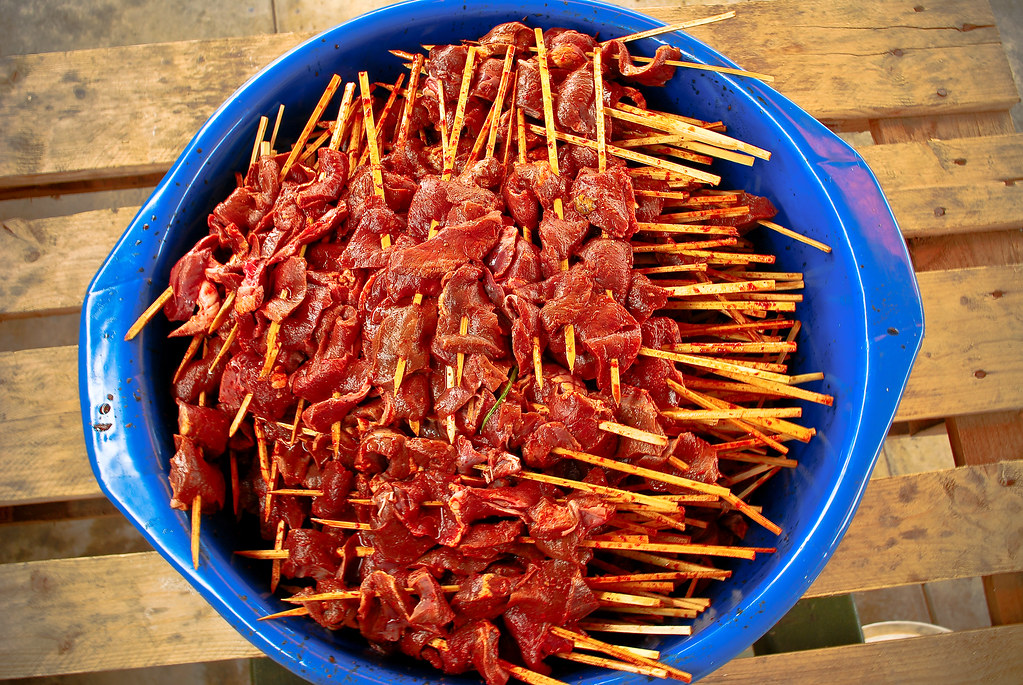
A dish of Peruvian origin similar in style and appearance to that of a kabob or brochette, consists of a marinaded beef (most commonly cow heart) skewered on sticks of sugar cane.  They are cooked on grills and can be found on virtually every highly trafficked street corner in Peru.  The marinade is made from a mixture of vegetable oil, red wine vinegar, cumin, lime juice, aji panca and garlic.  The anticucho's are usually served with other popular Peruvian alimentary staples: the potato and white corn.  It's also not uncommon to see the sweet Picarones and Chicha Morada being sold along side anticuchos in Peru.

The anticucho's origin dates back to Pre-Columbian times and the Incan Empire with scientific evidence and documentation from the Peruvian National Library Archive which shows that the Incas prepared the dish using llama meat as well as other local meats.  The name Anticucho recieves it's name from the Quechua language and the word "Antikucho" (anti = Andes & kucho = mix &/or cut).  When the Spanish Conquistadors arrive to Peru in the 16th century they were quite possibly the first outsiders to ever try the Peruvian anticucho, and like all cultures they took the dish and made it their own through adaptations to the original receipe by introducing beef in place of llama.  With the gradual fall of the Great Incan Empire at the hands of a few hundred Conquistadors, Peru entered into a re-structing of the country or what has also been recognized as the colonization period.  New cities were established and erected, new cultures were presented, foreign foods and animals were brought, religion was forced on the natives like current modern policy, and in the next hundred years Peru entered into a new era.  One of the many changes that occurred as a result of the countries re-structing was the introduction of African slaves by the Spanish.  It was at this time that the anticucho would see it's second iteration at the hands of the slaves.  In their food preparations the Spanish would frequently throw out the internal animal organs by passing them off on their slaves as a form of ailment.  The slaves would then take the organs (tripe, liver, and heart) and skewer them on sticks made from sugar cane followed by a heavy seasoning before marinading them.  The anticuchos would then be cooked over fire.  In the many years to follow this Afro-Peruvian adaptation would continue to proliferate poorer and middle-class parts of the city, where today it is favored by many Peruvians and is considered the official form.

For Peruvians anticuchos have become an iconic symbol of Peru's diverse culture and heritage that will no doubt continue to live on for many years to come.  In Lima alone there are many places where a person on a hunger quest can find some of best anticuchos in the city...but that's for another article!

For those that are interest in preparing this wonderful dish I have included a receipe as well as some other websites which also have the receipe.

Here is also a very interesting video of Peru's very own famous chef Gastón Acurio as he hits the streets of Lima on his very own tv show.  This video documents the cities best anticucho stands.  Unfortunately it's in Spanish and there doesn't seem to be a translation.  I would still recommend watching it though to get an idea of what anticucho stalls in Peru look like.


http://www.spiceworlds.com/anticucho.html - This website has the recipe but also sells the anticucho marinade already pre-packaged for those who would rather skip all the busy work.

Another website that sells the marinade already jarred called La Bodega Peruana.com has it for sell HERE

THE FOLLOWING RECIPE WAS TAKE FROM THE WEBSITE: RECIPE ZAAR - LINK HERE

SERVES 10 -12 , 30 -40 skewers (change servings and units)

Ingredients

Directions

  1. Place the pieces of heart in a glass or ceramic tray.
  2. Previously, soak the chiles in hot water until they are soft, devein and take the seeds off. If you want you can keep some of the seeds to make it spicier. In Peru we use aji panca, but this works well too.
  3. Blend the vinegar, garlic, aji panca (or dried chile), and all other ingredients with 1/2 cup of the oil until you have a soft paste.
  4. Pour it on the pieces of heart and distribute evenly so all pieces are well covered and can absorb the marinade. Cover and let sit in the refrigerator for about 30 minutes. Do not let them marinade for too long or they will dry out because of the vinegar.
  5. In the meantime, place thick bamboo skewers to soak in water so they don't burn when they go on the grill.
  6. Use a charcoal grill and make sure the coals are very hot before you start.
  7. Stick three or four pieces of heart in each skewer, so that the meat lays flat.
  8. Save the rest of the marinade in a cup or small bowl and add the rest of the oil to it, mixing well. This will be used for basting the anticuchos on the grill.
  9. Tie some pieces of fresh corn husk with a string made out of some more husk and shred them half the way to make a kind of brush and use it for basting. (You can use dry husk too but you need to soak it for a while in warm water to make it flexible and then pat it dry before you use it).
  10. When the coals are ready and the grill is hot place the anticuchos flat on the grill and baste them generously with the leftover marinade and oil mix.
  11. This will drip and cause the coals to flame, make sure it flames over because this is what gives the anticuchos their distinctive flavor.
  12. Let anticuchos cook for about 1 minute and a half on each side. DO NOT OVERCOOK! They will dry out and become tough. Medium or medium well is fine. Turn them over continuously and keep basting and flaming until they are done.
  13. Hold two or three at a time to turn them over quickly.
  14. At the same time, place the pieces of corn and potatoes on a corner of the grill, baste them with the same marinade and allow them to be flamed too.
  15. Serve three skewers in each plate, accompanied by one piece of corn and one potato. You can also cut the potatoes in half (across not length wise) and stick a piece at the end of each skewer.
  16. Serve hot, right out of the grill, don't let it get cold! ENJOY! :P.
  17. What takes the longest time is to slice and cut the heart in squares and stick the pieces on the skewers; as you get practice doing this it will be faster, allow yourself some more time of preparation the first couple of times.
  18. You can also use regular beef, chicken, fish, prawns, or lamb to make anticuchos, but the original and traditional recipe calls for cow heart. Hope you like it! :).


Cheap Eats in Peru - Menú

Posted by Marco Antonio Mendoza Saturday, January 23, 2010 0 comments


One of the great perks about living in Peru is that you don't need to spend a lot of money to eat great Peruvian food.  Those living in Peru eating fairly healthy in comparison to what most Americans consume.  For the past years the US has tried very hard to encourage Americans to eat healthier as it's population's obesity levels continue to rise (somewhere around 65%).  Granted eating healthy is only one aspect that contributes to obesity but it is one that has a larger impact.  While fast food franchises like Mcdonald's, KFC, Pizza Hut, Domino's, Papa John's, Tony Romas, TGI FRIDAY'S, Chili's, and Burger King continue to invade the country most Peruvians still can't afford to eat regularly at such establishments.  For the large majority of the population their daily diet consists of eating meals made from scratch.  Whether prepared at home or eaten at a market or restaurant, the most common preparation of meals in Peru is done with raw and fresh ingredients that are purchased locally.  The overall quality of a meal may vary from cook to cook but the concept remains the same, fresh ingredients. 

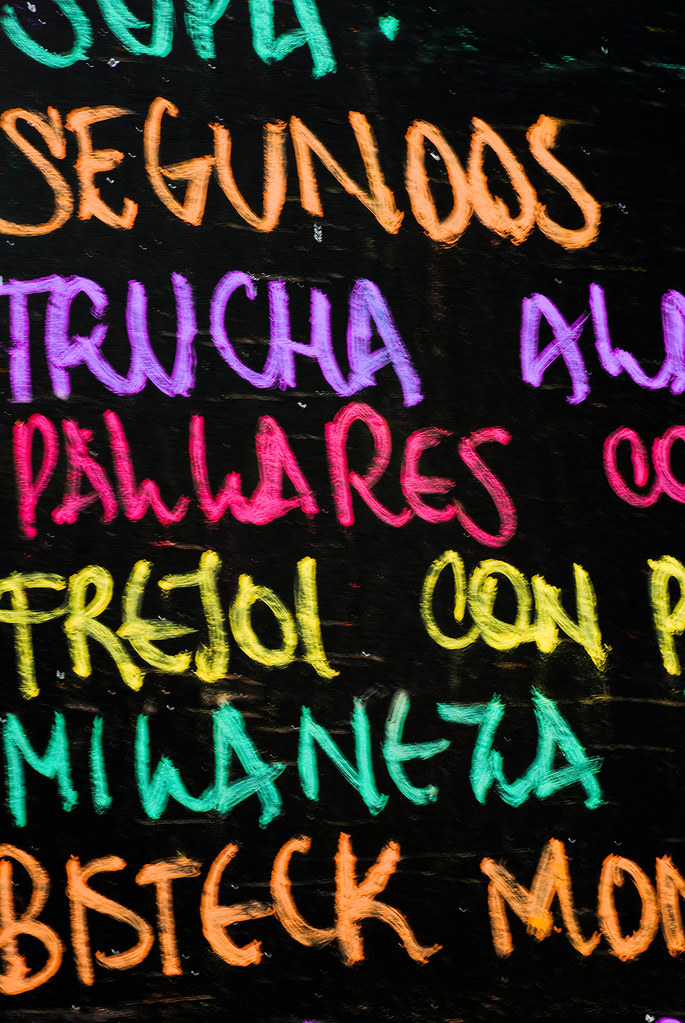
In Lima, like most other places in Peru lunch is the dominant meal for Peruvians with breakfast and dinner playing smaller roles.  From noon til 2pm it isn't uncommon to see restaurants and markets crowded with hungry patrons, as the lunch hour is the time where most Peruvians head out for lunch.  The economical choice for lunch in Peru is to order from what is called the menú in Spanish which means menu.  The menú is a predetermined list of lunch options for the patron to choose from and is commonly divided into two sections.  The first section being the starter menu or entrada, this portion of the menu consists of a small starter usually a soup of some kind and/or a dish like Crema de Rocoto (sliced potatoes served with a spicy rocoto pepper sauce).  The second portion of the menu consists of the main courses or segundo.  The segundo can vary from many different Peruvian staples like Cau Cau (made from the small intestine) to Arroz a la Cubana (a very simple criollo dish made up of rice, fried eggs, and fried plantain bananas) or Lomo Saltado to Tallarin Verde (Spaghetti with Spinach sauce).  When a person orders from the menú their meal isn't completed until they are offered their beverage or refresco.  A refresco is a drink made using herbs (like yerba Luisa), fruits (like apples, star fruit, maracuya, or granadilla), or spices (cinnamon), and boiling them in water allowing the heat to extract the flavors of the ingredients used to create a wonderful and refreshing drink (which is usually served room temperature).

If it sounds like a lot of food to eat it's important to take into consideration that very little food is eaten during both breakfast and dinner, therefore a hardy and plentiful serving of food at lunch is crucial for Peruvians returning to work (most Peruvians work from 9am to 6:30pm, sometimes later).  One might also expect to pay quite a bit for such a meal but in Peru the menú is one of the most economical lunch options with the cheapest being S/. 3.00 (roughly $1 USD, take THAT McDonald's Dollar Value Menu!).  It should be considered that the price of a menú may vary in price depending on the location of the restaurant or market (in Miraflores and San Isidro the menú is roughly S/. 7.00). 

A quick note, most restaurants and markets in Lima offer a menú during the lunch hour, but it is crucial that you show up early since the better menú options disappear quickly. 

Aji Limo

Posted by Marco Antonio Mendoza Tuesday, January 19, 2010 0 comments

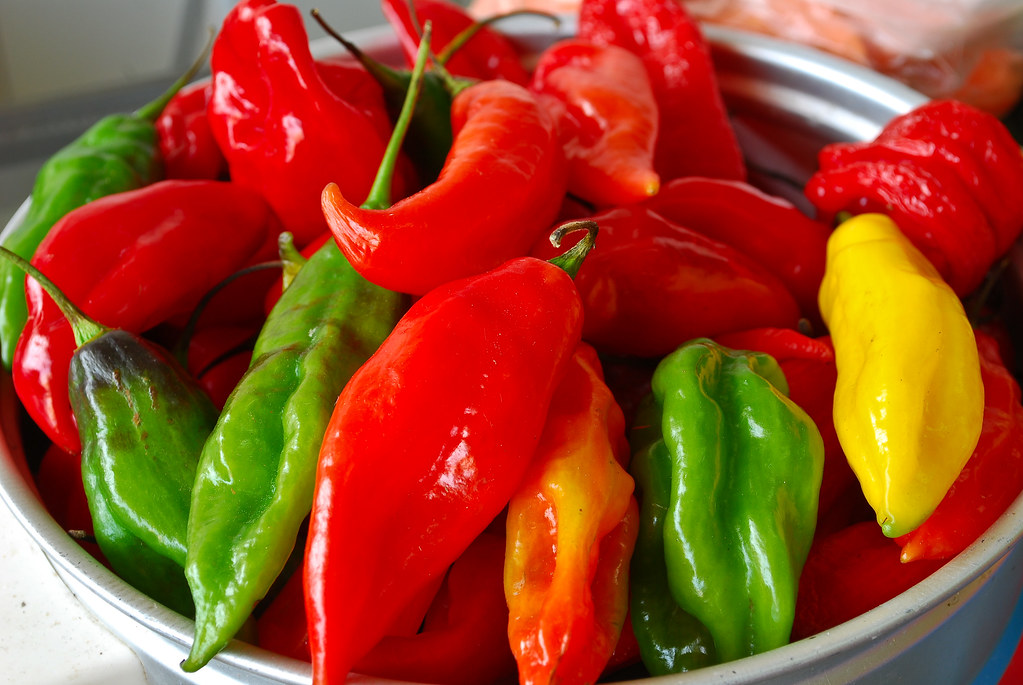
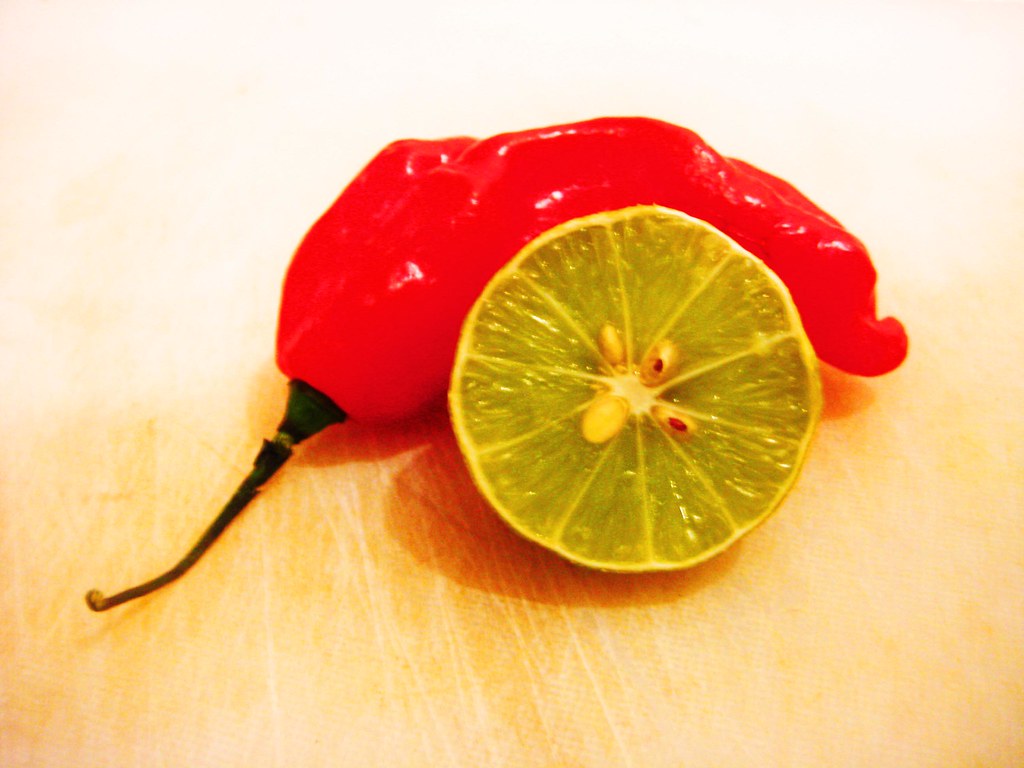
Ají Limo is a Peruvian chili that is vibrant in color and varies from yellow, green, red, or purple.  The chili packs quite a punch and can be quite hot, in fact it registers in on the Scoville scale as 5,000 to 30,000 Scoville units or just plain HOT!  The chili itself is a unique species of the chili pepper, known scientifically as Capsicum baccatum of which other popularly known Peruvian ajís belong to. 

Ají limo is the fruit that grows on the South American plant called Capsicum Baccatum var. Pendulum (which belongs to the family of Magnoliopsida: Asteridae: Solanales: Solanaceae), a plant identifiable by it's cream coloured floweres w/ green/gold corolla markings on them.  The ají limo is typically elongated but also can be found in it's short and stubby size as well.  Common to the Andes region the ají limo grows at mid-elevation altitudes, but is also grown along the coast and in the northern Amazonían jungles of Peru.  Ají limo along with all other baccatums are credited for their great resistance to cold temperatures and weather, making them great candidates for cultivation in the many parts of the US.   

The Ají was discovered by archeologists and historians to have been a principle food ingredient of many Peruvian indiginous groups, with several ceramics created in the spicy fruit's honor.  In Perú, the ají limo is a staple ingredient along with all its other varieties among the people of the Sierra (highlands/andes region) and Costa (coast).  In Quechua, the word for ají is "Uchu".  Ají limo is most commonly used in fresh form but can also be found dehydrated, dried, diced, frozen, canned, jarred, in many markets in Perú.  Eat in a cebicheria in Lima and you will soon find that ají limo is used with great frequency in many seafood dishes like choritos a la chalaca, sudado, tiraditos, just to name a few.     

Today like with other ají's, the ají limo is exported to markets, restaurants, and homes all over the world as the spicy chili continues to gain popularity and awareness.  In the US ají limo can be purchased in many markets for those looking to purchase the chili in whole form.  Those interested in growing ají limo can purchase it through several seed companies who market it under the following names: ‘Aji Limón,’ ‘Lemon Drop’ and ‘Peru Yellow.’ 

For those interested in purchasing ají seeds here is a link to an author who provides a few reliable sources as well as planting tips/advice for growing the chili. 

Peruvian Rosca de Reyes

Posted by Marco Antonio Mendoza Wednesday, January 13, 2010 0 comments

There is this great article on Canela and Comino (a website about food, kitchens and the flavors of Peru) that talks about the Peruvian Rosca de Reyes which translates to Peruvian King's Ring, which is a beautiful and delicious pastry that is eaten and made for the celebration of the Christian/Catholic holiday of the Epiphany (6th of January).  The Epiphany is a feast day that celebrates the Incarnation of Jesus Christ, and focuses on his birth as well as the visit of the three magi (or wise men?) from Bethlehem. 

DISCLAIMER!: BY NO MEANS AM I VERSED OR KNOWLEDGEABLE IN RELIGIOUS HISTORY, SO DON'T CAST YOUR STONES UPON ME FOR THE POSSIBLE INACCURACIES THAT YOU MAY AND PROBABLY WILL FIND IN THE ABOVE TEXT 

~ THANK YOU!
THE ESTABLISHMENT

Welcome back!  As I was saying the Peruvian Rosca de Reyes is in my personal opinion similar in taste to the traditional and dreaded fruit cake that is unwillingly consumed in the US.  My opinion however is only a reflection of the store bought versions of the Rosca de Reyes that I have eaten, I would more than happily like to have my previous statements retracted if I were to a good Rosca de Reyes (again this is all just personal preferences here!). 

Looking at the photo provided on Canela and Comino's website I would imagine these were taken by the author since she holds a passion for cooking, baking and food in general (I respect that!), which leads me to also conclude that she baked it as well.  I must admit those photos did make my mouth water, just a little. 

Anyways the article on the her website is an in depth discussion and dissection of the famous religious holiday treat (Jeez, trying saying that three times fast!).  I would definitely encourage everyone to give it a good read.  If you are a big food buff (one f or two?) you will enjoy some of her other articles as well.

*photo taken from canelaycomino.com website

What is Queso Fresco?

Posted by Marco Antonio Mendoza Tuesday, January 12, 2010 0 comments

"What is Queso Fresco?"

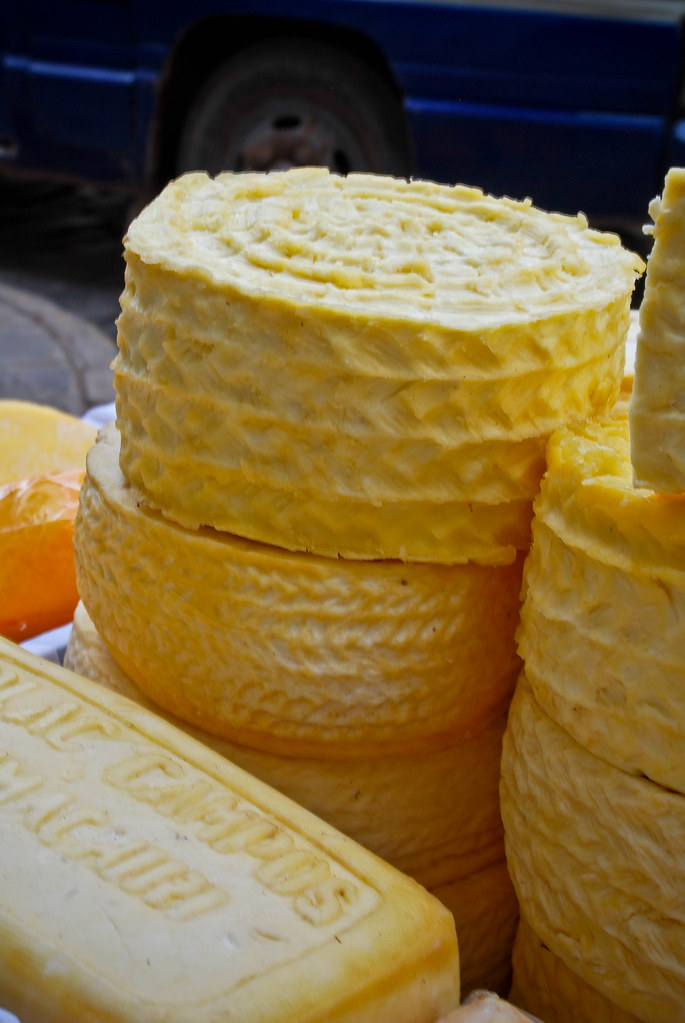
Queso Fresco which in Spanish means "fresh cheese" is a soft, creamy, mild unaged white cheese whose origin is from Spain.  It was with the arrival of the Spaniards to the Americas that queso fresco was introduced.  Today, queso fresco is a eaten, prepared and used in practically every Latin American country and Peru is no exception, with the majority of the Peruvian population consuming the cheese on a daily basis.  Queso fresco is made by heating whole fresh milk to near-boiling tempertures, then an acidifying agent like vinegar is added.  The mix is stirred until the formation of curds is visible at which point the curds are strained in cheesecloth for three to five hours.  Some versions retain more water while others are pressed and therefore are less watery.  The total production time required to make queso fresco takes only a few days (less than a week). 

Queso fresco may be made with cow's milk or even a combination of cow's milk and goat's milk.  Queso fresco is a cheese that is commonly used in several Peruvian dishes like the lesser known (to tourists at least) Solterito Arequipeño (a salad made of queso fresco, onion, olives, tomato, rocoto, beans and olive oil), the most recognizable use of the cheese being in dishes like Papa a la Huancaina or Ocopa

Depending on the region (Arequipa vs. Huancayo or Cusco) in which the queso fresco was made the consistency of the cheese can vary a little, although it is agreed upon that most queso fresco crumbles/falls apart quite easily making it perfect for salads. 

"What are the Health Benefits of Queso Fresco?"

Most cheeses contain high percentages of acidic fats making them a fairly fatty food to consume, however queso fresco made from goat's milk is low (%7) in fat content making it a healthier alternative.  Even better news is the linoleic acid which exists in this type of milk, an acid that helps to reduce/burn fat!  Queso fresco also contains a fairly wide range of vitamins and minerals like vitamin A, B, & D which are all important to help preserve and maintain our body tissues.  Aside from Calcium which is found in milk products, queso fresco also contains other minerals such as, magnesium, phosphorus, and sodium

"Where can I get Queso Fresco?"

If you haven't already tried queso fresco I highly recommend it.  For those who live in the States, queso fresco can be purchased in most specialty or Mexican markets.  If you want to try before you by a whole dang loaf I would suggest trying it at a local Mexican restaurant (for those in the USA) since it is a cheese that is used in many of their dishes.  For those in Peru who haven't tried it (and I don't know why you would'nt have?) try ordering Papa a la Huancaina, Ocopa, Solterito Arequipeño, tequeños, or ask for any other dish that might contain it. 

A homemade video of how to make queso fresco for those interested in making it themselves:

Great Peruvian Cevicheria - El Anzuelo

Posted by Marco Antonio Mendoza Wednesday, January 6, 2010 0 comments

El Anzuelo or "fishhook" in English is a word that best represents the quality of the seafood you will find at the cevicheria El Anzuelo in Chorrillos.  When it comes to good fresh seafood (with the exception of the HUGE fish market in Villa Maria del Triunfo) in Lima no other districts can compete with Callao and in this case Chorrillos.  Both districts are also recognized for the large amount of fishing that takes place in its waters of their coasts.


With great fresh seafood coupled with the love and admiration of cooking, Chef Teo creates wonderful and simple dishes that leave you wanting more.  Owner and well-known Chef Teo provides the citizens of Chorrillos with a large menu of various seafood dishes featuring everything from the Peruvian classic Ceviche Dos Tiempos to the appetizingly spicy calamari stuffed tequeños.   Chef Teo is well recognized for his culinary creations from his days back when he worked as a chef at La Choza Nautica, located in Breña a few years ago.  Deciding it was time for a change the Chef decided to open a cevicheria of his own and today El Anzuelo is a testament of his hardwork and dedication.

At first appearance El Anzuelo has the look of any other local cevicheria on Av. Huaylas, it's small and quaint size may be intimidating but upon being seated and taking in the nautical atmosphere of fishing nets and sea shells along with the aroma of seafood dishes being prepared and will find your appetite grow.  The service is quick and the food doesn't take more than 15 minutes from time of order (on a regular day) til it reaches your table.  Any true fan of seafood who hasn't already eaten at this restaurant will want to give El Anzuelo a try and for what you get, you will soon discover that it's well worth the modest price.


I personally recommend the restaurant and give it a 5 out of 5 in my book.


This is an approximate address:
Defensores Del Morro 271, Chorrillos
Lima 09, Peru
(0)1 291 3170


The restaurant is located on Av. Huaylas in between Av. Santa Teresa and Av. Olaya, across from the Garibaldi Fire Station.  

Price: $-$$


Fresh Squeezed Orange Juice in Lima, Peru

Posted by Marco Antonio Mendoza Saturday, December 5, 2009 0 comments

One the best things about living in Lima is the fact that there are thousands of street vendors lining the streets, each one selling something different from succulent anticuchos (cow hearts) to alfajores (peruvian pastry) and empanadas.  These vendors can usually be found at just about all hours of the day and usually have an identifiable cart or stand.  Quite possibly one of the most popular and numerous of street vendor items is none other than orange juice and BOY is it GOOD!


As you can see from the picture above an orange juice stand consists of two special devices that help to make the juice making process easier.  The first device is located on the end of the cart and resembles a vice with the exception of a small blade and a crank handle that is used to quickly and efficiently peel the oranges.  Next, the peeled oranges are cut into halves and placed inside an old fashion juicer, this device like your grandfathers push mower requires good ole fashion brute strength to operate.  The juice is produced rather quickly as the perveyours have several years experience in their field.

The quality of the fresh squeezed orange juice is uncomparable to anything I have ever drank in the States, here the oranges come in a wide variety with some of the sweetest types that you wont find in your local grocery store.  Once you have tried GOOD fresh squeezed orange juice like what can be found in Peru, you will be able to tell the difference when you try drinking pasturized orange juice.  What makes fresh squeezed orange juice so popular in Lima is not just it's availablity throughout the city, its also its price.  Often times S/.1.00 is all you need to purchase two tall glasses of OJ, probably one its main reasons for success after flavor of course. 


Why is the orange juice so good here in Peru?  It's because of Peru's geography really, Peru is regarded as one of the only topographically diverse countries in South America.  What does that mean?  That mean's that the geography of the country is widely diverse from coastal deserts to high mountainous plains all the way to dense rainforests.  It is because of this that Peru is also known for being a resource rich country (not just minerals and oil either), a reality that has helped the country through it's rough economic situation. 

So the next time your in Lima, Peru I recommend you hunt down an orange juice stand (its not hard to do, really) and give it a try, I guarantee you'll love it.

Peruvian Food - Restaurant Review

Posted by Marco Antonio Mendoza Thursday, December 3, 2009 0 comments

Today's review is of Las Terrazas Grill located in the heart of Barranco.  With Peruvian food always in demand among locals and tourists an establishment like Terrazas has the appeal and presence to draw just about anyone through their intricate and lavish doors.  Located across from the parque municipal "plaza de armas" (municipal park)  Las Terrazas (the terraces) has a structual design that is very unique and stands out among its surrounding environment.  The terraces of the building are beautifully designed, and like the buildings exterior, the interior of building is just as wonderfully decorated with large oil paintings on the walls and the bar made of an indistiguishable carved wood makes you feel like you have gone back in time.  However upon further inspection it becomes evident that Las Terrazas is more about its nightlife that its restaurant is a secondary attraction.   Las Terrazas has four floors with each one hosting its own dedicated dance floor and music, but lets face it in these economic times a nightclub is much more profitable than a restaurant any day, and if your located in an area that has several competing nightclubs that cater to a large number of locals and tourists then why the HELL wouldn't you want to jump on the band wagon.

The food at Las Terrazas is primarily seafood with dishes like ceviche being a flagship of the menu.  If your not into seafood or have just had more seafood than you care to eat, Las Terrazas also offers meat and pasta options like their beef medallions in mushroom sauce served with white rice and french fries or beef raviolis en their own special Terrazas meat sauce.  I had the opportunity to try both but was a little disappointed in the quality of the food.  First off I chose to visit the restaurant on a Sunday around 3pm in the afternoon with my girlfriend when the restaurant was rather deserted.  We took a few minutes to look over the rather large menu that specialized in almost everything (I'm not a big fan of restaurants that serve a broad range of food, it's usually an indication that food quality is going to be poor or mediocre).  Once we ordered we waited about a good 20 to 30 minutes to recieve our meals which given the fact that we were the only ones there was also disappointing.  To top it off our meals didn't even come out at the same time, there was roughly a 5 minute wait for my girlfriends dish to come out of the kitchen.  This makes me wonder about the restaurants service capabilities and quality on a BUSY day.

The food was ok but not much better than that.  What was consistent was the amount of salt the chef or cook (I am assuming the latter) decided to use in both dishes which was more than enough to make the meal unenjoyable, I believe a beverage became requisite in order to finish the meal.  The price was adequate for a restaurant located in a tourist hotspot.  Personally I don't see myself eating there again anytime soon, however this does not mean that I am writing off the restaurant completely since I haven't tried their seafood which as I mentioned earlier is their "bread and butter" so I might just have to go back and give them another try.  I would also like to check out their dance floors.

I give the restaurant 2 stars out of 5, a fairly low rating but given the experience I believe it to be fair.

Sunday Morning Hangover

Posted by Marco Antonio Mendoza Sunday, October 18, 2009 0 comments

Ugh, I just stumbled out of bed at 10:40am and feel a little light headed.  You know you have partied hard when you wake up the next day still drunk.  Last night Zdenka and I met up with my father at Milenium Karaoke located on Av. Aviacion near Av. Javier Prado in San Borja.  My father decided to meet up with us after having just returned from a wedding in Chaclacayo.

Milenium is by far one of my favorite karaoke bars in Lima, though I must admit the karaoke bars here don't have the same charm as Suki's or the Cheerful Tortise in Portland.  We ordered a bottle of Johnny Walker Red Label (it's one of the most popular brands of whiskey here in Peru,  I miss Jim Beam, Wild Turkey, and Crown Royal) which is brought out with a bucket of ice and a small pitcher of water, very classy.  I did my best to sing Billy Joel's "Just The Way You Are" and did alright I think.  After about 3 hours of karaoke goodness we headed off to Pueblo Libre to pick up Zdenka's sister Almendra who was at some house party.  In our inebrated state it took us like 25 minutes to locate the street where the party took place (well more like 40 minutes if you count the small fight + pistol whipping that broke out over a controversial photo I took of a certain someone publicly urinating).

After we finally found her we the munchies finally took over and headed to a late night Anticucheria for some anticuchos and picarones.  I ate like four HUGE anticucho skewers and most of Zdenka's picarones, BEWARE of the hungry drunk skinny guy!  Bellys full and late night desires satisfied we dropped Zdenka and Almendra off at their home around 4am and head home where I would crash half naked on my bed only to awake the next day with half my pillow in my mouth with face covered in droll/saliva.  GOD I love Saturday's.

On a side note, I came across this video on JD's Man Stories, one of my favorite websites.  The video is fairly PG13 so it shouldn't offend too many people.  I don't normally get British humor but this sketch definitely made me laugh.  Enjoy!

La Basílica Menor y Convento de Nuestra Señora de la Merced

Posted by Marco Antonio Mendoza Tuesday, September 15, 2009 1 comments

On Sunday I went for a walk through the Plaza de Armas in Lima. We went to take pictures of annual migration of tourists who come from continents afar. We walked along Jirón de la Unión which is several closed off streets filled with restaurants and shops that connects the Plaza de Armas with the Plaza San Martin.


The day was overcast but luckily it was warm out. Saturdays and Sundays at Jirón de la Unión are the most frequented by the public and can get pretty crowded in the afternoon hours. Zdenka and I were hungry from all the site seeing and walking and we spotted this street cart that was operated by three women who were selling Picarones, which is deep fried dough covered in honey. The aroma of the honey in the air was so robust and floral that we could smell it from two blocks down. While eating our delicious and sticky Picarones I noticed an abundance of bees that quickly turned into a horde of bees who were feasting out of the trash can near the stand. I would have actually almost ate a bee myself if it wasn't for Zdenka's squeal of terror at the site of the winged arthropod.


Stomachs silenced and satisfied we continued our stroll through Jirón de la Unión until we came upon a church. Zdenka immediately identified it as La Merced, the very church where she had her first communion (I think that's how you spell it).


Anyways, La Basílica Menor y Convento de Nuestra Señora de la Merced as it is officially called in Spanish was constructed by Friar Miguel de Orenes in 1535, who was later given the title of archangel San Miguel.

La Merced is located on the corner of the fifth block of Jirón de la Unión in the historical district of Lima. The original temple was constructed of wood and the second one which remains to this day was made of adobe and brick.


The front entrance of La Merced is considered to be a historical relic and
is recognized for its amazing artistic quality. It was made from granite that
was brought originally from Panamá. The entrance adornment was constructed in
three seperate pieces and was designed in a unique fashion that cannot be found
in any other church in Lima. The columns of the entrance are fashioned in the baroque style.

The main figure in the center of the adornment just above the door entrance is
of Nuestra Señora de la Merced which was considered for centuries as the celestial
protector of the city.


the church was designated a Minor Basilica by Pope Pius XII in 1946. The church
has also survived several decades of earthquakes and fires and has been reconstructed and restored on numerous occasions. The interior has a rustic warmth to it that emanates a sense of tranquility and serenity (shot me if those mean the same thing, I'm being poetic hear).


In the cript located in the preparatory lie the remains of the La Merced's
original donor of the land with which the church and convent were build upon.
El Capitan Francisco de Becerra.

For those of you interested in visiting La Merced here are the hours when it is open to the public. There is also a museum too but I have no clue what it's hours are:

Hours open to the public
Mon Tue Wed Thu Fri Sat Sun
Open 8:00 8:00 8:00 8:00 8:00 8:00 8:00
Closed 12:45 12:45 12:45 12:45 12:45 12:45 12:45
Open 16:00 16:00 16:00 16:00 16:00 16:00 7:00
Closed 20:00 20:00 20:00 20:00 20:00 20:00 20:00

Welcome To Inti Aperture!


A travel blog about living abroad in Lima, Peru and my travels to cities like Cuzco and Machu Picchu. Inti Aperture is a blog about travel, Peruvian food, culture, adventure, jobs, tourism, travel, news, teaching English, photography, and living abroad, making it a perfect resource for the traveling expat.
Visit Peru!


Bienvenidos!


Un buen lugar para practicar ingles. Articulos sobre Peru, en ingles y escritos por un Americano viviendo en Lima. Todo lo que tu quieres saber sobre Peru en un solo sitio: experiencias, historias, recommendaciones de restaurantes, bares, y clubs, videos, consejos, recursos, guías de turismo, fotos de Peru, comidas tipicos del Peru, cultural Peruano, noticias de Peru, lugares y destinos turisticos, viajes en Peru, hasta SEXO....bueno todo menos eso... :)


Follow This Blog

Visitors To The Site