Posted by
Marco Antonio Mendoza
Wednesday, January 13, 2010
0
comments
There is this great article on Canela and Comino (a website about food, kitchens and the flavors of Peru) that talks about the Peruvian Rosca de Reyes which translates to Peruvian King's Ring, which is a beautiful and delicious pastry that is eaten and made for the celebration of the Christian/Catholic holiday of the Epiphany (6th of January). The Epiphany is a feast day that celebrates the Incarnation of Jesus Christ, and focuses on his birth as well as the visit of the three magi (or wise men?) from Bethlehem.
DISCLAIMER!: BY NO MEANS AM I VERSED OR KNOWLEDGEABLE IN RELIGIOUS HISTORY, SO DON'T CAST YOUR STONES UPON ME FOR THE POSSIBLE INACCURACIES THAT YOU MAY AND PROBABLY WILL FIND IN THE ABOVE TEXT
~ THANK YOU!
THE ESTABLISHMENT
Welcome back! As I was saying the Peruvian Rosca de Reyes is in my personal opinion similar in taste to the traditional and dreaded fruit cake that is unwillingly consumed in the US. My opinion however is only a reflection of the store bought versions of the Rosca de Reyes that I have eaten, I would more than happily like to have my previous statements retracted if I were to a good Rosca de Reyes (again this is all just personal preferences here!).
Looking at the photo provided on Canela and Comino's website I would imagine these were taken by the author since she holds a passion for cooking, baking and food in general (I respect that!), which leads me to also conclude that she baked it as well. I must admit those photos did make my mouth water, just a little.
Anyways the article on the her website is an in depth discussion and dissection of the famous religious holiday treat (Jeez, trying saying that three times fast!). I would definitely encourage everyone to give it a good read. If you are a big food buff (one f or two?) you will enjoy some of her other articles as well.
Posted by
Marco Antonio Mendoza
Tuesday, January 12, 2010
0
comments
In celebration of Lima's anniversary this Sunday a group of Pisqueros (chefs, gastronomes, pisco lovers, and companies that produce the National drink of Peru, Pisco) have put together what their calling "La Semana del Chilcano" (the Week of the Chilcano) that will run from Monday of this week til the 17th. The celebration is an collaborated effort to promote the consumption of Pisco and to raise awareness about the drink Chilcano de Pisco.
The cocktail Chilcano de Pisco is a popular one among Peruvians much like Pisco Sour, although considered much simpler to prepare. While the variations to the Chilcano may vary among bartenders everywhere in Peru the core ingredients remain true.
"What is in a Chilcano de Pisco?"
The Chilcano is an alcoholic beverage that uses Pisco (which kind depends upon personal preference, Quebranta being the most commonly used). The ingredients required to make a Chilcano are simple and can be easily obtained both in Peru as well as in the US. The ingredients used consist of the following:
Pisco Peruano (Which is the REAL PISCO, not that imitation Chilean Pisco)
Ginger Ale
Fresh Peruvian Limón Juice (For the US substitute with Key Limes)
Ice
In celebration of La Semana del Chilcano, many bars, restaurants, discotecas, hotels, and taverns in Lima, Cusco, Arequipa and many other cities will be celebrating the event.
"Chilcano de Pisco Receta / Chilcano de Pisco Receipe"
Pour the Peruvian Pisco into a highball glass filled with ice cubes
Add a spoonful of lemon juice, then fill with ginger ale
Serve
Ocucaje, a Peruvian Pisco manufacturer located in Arequipa has a page that offers other great drink recipes using Pisco. Check it out here!
"Where can I find a good Chilcano de Pisco in Lima?"
One restaurant/bar that I would highly recommend for Chilcanos would be that of "El Bolivariano", located in Pueblo Libre, Lima. They sell a great Chilcano that you the patron can prepare to your personal taste as they bring a bottle of pisco accompanied by ginger ale and ice. The environment there is great and their food is excellent. On Friday and Saturday nights El Bolivariano offers music in their large dinning hall where the customers can enjoy a great drink followed by a night of great dancing.
Here is a video illustrating the Chilcano that they sell at El Bolivariano:
I should also mention the famous and very old bar and cafe "El Cordon" located in the center of Lima in the historical district, near the Plaza de Armas. There they are well known for their sandwiches and of course Chilcano de Pisco.
El Comercio (Peru's National and Oldest Newspaper) has posted a list of places offering discounts along with a detailed description of the discounts. The list is provided below:
Heladería Quattro D
Chilcano de Pisco flavored ice cream / Helado de chilcano de pisco. Bravo Restobar
Second Chilcano half price / Segundo chilcano a mitad de precio. Caplina
The first Chilcano for only S/. 3, the second one at S/. 6 / El primer chilcano a 3 soles; el segundo a 6 soles. Chepita Royal
The second Chilcano is FREE!!! / El segundo chilcano es gratis. El Cheff y el Mar
2 x 1 deal on Chilcano de Pisco / 2×1 en chilcano de pisco. El Escondite del Gordo
For every tiradito, client recieves a courtesy Chilcano. Additional Chilcanos at 25% discount / Por cada tiradito, un chilcano de cortesía. Chilcano adicional con 25% de descuento. El Pez Amigo
50% discount on Chilcanos / 50% descuento en chilcano. La Vaca Loca
50% discount on Chilcanos / 50% descuento en chilcano. Hanzo
2 x 1 on Chilcanos / 2×1 en chilcanos. Brujas de Cachiche
2 Chilcanos for S/. 22 / Dos chilcanos por 22 soles. Además, tabla de cebiches para dos o tiradito Brujas de Cachiche para dos, con dos chilcano, por 65 soles. Ristorante Fratello
2×1 en chilcanos de pisco Italia, Quebranta y Acholado, con piqueo de brochetas. Trattoria dei Pratti
With purchase of Chilcano, receive a complementary antipasto / Por un chilcano, de cortesía va el antipasto. Xcess
Chilcano de Pisco for S/. 10 and on the 13th, free Chilcanos for the ladies (until 12pm) / Chilcano de pisco a 10 soles. Y el miércoles 13, gratis para las chicas (hasta las 12 p.m.) Cepas Restobar
Receive a Chilcano with the purchase of an appetizer / El chilcano viene con piqueo. Pisco Bar
2×1 en chilcano de pisco. Capitán Meléndez
2 Chilcanos for S/. 22 / Dos chilcanos por 20 soles. Depeche Order
Second one at half price / El segundo es a mitad de precio. La Pisquería de Don Luis
Con cada chilcano, gratis un piqueo de aceitunas o quesos. Bar Inglés (Hotel Country Club)
Dos chilcanos por 26 soles. Swissôtel
2×1 (Dos chilcanos y un piqueo criollo a 50 soles). Bohemia
Dos chilcanos y piqueo de cortesía por 25 soles. Hotel Los Delfines
Seis variedades de chilcanos con piqueo de cortesía.
*first photo taken from Living in Peru website **Second photo taken from Ocucaje.com website
Here is a list taken from Living In Peru's article of the places that will be offering discounts for the drink this week:
Lima
Asia
Cusco
Ica
Astrid y Gastón
Bravo Restobar
Cala
Pescados Capitales
Punta Sal
Picas
Antigua Taberna Queirolo
Tanta
Hanzo
Fiesta
Brujas de Cachiche
Scena
Fusión
Bar Inglés del Country Club
Huaringas
Casandina
Swissotel
Caplina
Costanera 700
Ristorante Fratello
Trattoria dei Pratti
Pisco Bar
Capitán Meléndez
Junius
Depeche Order
Quattro D
El Grifo
Mayta
Alfresco
Chepita Royal
El Chef y el Mar
El Pez On
Lomo de Mar
El Bolivariano
Chala
El Rincón Que No Conoces
Rinconcito Arequipeño
Barajas Restaurant & Lounge
550
Xcess
Santos Bar
Cepas Restobar
El Dragón
El Escondite del Gordo
El Pez Amigo
La Vaca Loca
Aca No Más Bar
La Pisquería de Don Luis
Acquavit Hotel & Casino
Bubba Lounge
Play Club
Punta Sal
Depeche Order
La Chicha
Cosa Nostra
Bar Cusco
Inka Grill
Limo
Inkanto
Pacha Papa
Zu Lounge
Bistro 470
Hotel Monasterio
Andean Wings Hotel
El Pisquerito
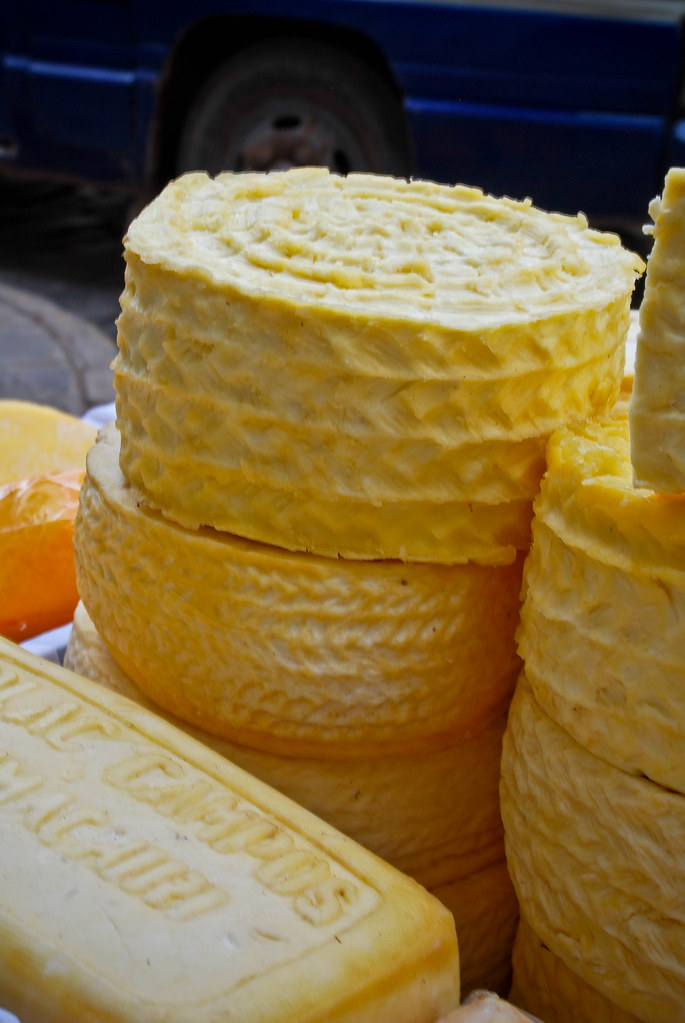
QuesoFresco which in Spanish means "fresh cheese" is a soft, creamy, mild unaged white cheese whose origin is from Spain. It was with the arrival of the Spaniards to the Americas that queso fresco was introduced. Today, queso fresco is a eaten, prepared and used in practically every Latin American country and Peru is no exception, with the majority of the Peruvian population consuming the cheese on a daily basis. Queso fresco is made by heating whole fresh milk to near-boiling tempertures, then an acidifying agent like vinegar is added. The mix is stirred until the formation of curds is visible at which point the curds are strained in cheesecloth for three to five hours. Some versions retain more water while others are pressed and therefore are less watery. The total production time required to make queso fresco takes only a few days (less than a week).
Queso fresco may be made with cow's milk or even a combination of cow's milk and goat's milk. Queso fresco is a cheese that is commonly used in several Peruvian dishes like the lesser known (to tourists at least) Solterito Arequipeño (a salad made of queso fresco, onion, olives, tomato, rocoto, beans and olive oil), the most recognizable use of the cheese being in dishes like Papa a la Huancaina or Ocopa.
Depending on the region (Arequipa vs. Huancayo or Cusco) in which the queso fresco was made the consistency of the cheese can vary a little, although it is agreed upon that most queso fresco crumbles/falls apart quite easily making it perfect for salads.
"What are the Health Benefits of Queso Fresco?"
Most cheeses contain high percentages of acidic fats making them a fairly fatty food to consume, however queso fresco made from goat's milk is low (%7) in fat content making it a healthier alternative. Even better news is the linoleic acid which exists in this type of milk, an acid that helps to reduce/burn fat! Queso fresco also contains a fairly wide range of vitamins and minerals like vitamin A, B, & D which are all important to help preserve and maintain our body tissues. Aside from Calcium which is found in milk products, queso fresco also contains other minerals such as, magnesium, phosphorus, and sodium.
"Where can I get Queso Fresco?"
If you haven't already tried queso fresco I highly recommend it. For those who live in the States, queso fresco can be purchased in most specialty or Mexican markets. If you want to try before you by a whole dang loaf I would suggest trying it at a local Mexican restaurant (for those in the USA) since it is a cheese that is used in many of their dishes. For those in Peru who haven't tried it (and I don't know why you would'nt have?) try ordering Papa a la Huancaina, Ocopa, Solterito Arequipeño, tequeños, or ask for any other dish that might contain it.
A homemade video of how to make queso fresco for those interested in making it themselves:
Posted by
Marco Antonio Mendoza
Monday, January 11, 2010
0
comments
Yesterday I was near Plaza Grau, in downtown Lima when I saw a banner that announced the upcoming celebration of Lima's 472 year since its' founding by Spanish conquistador Francisco Pizarro on January 18th, 1535.
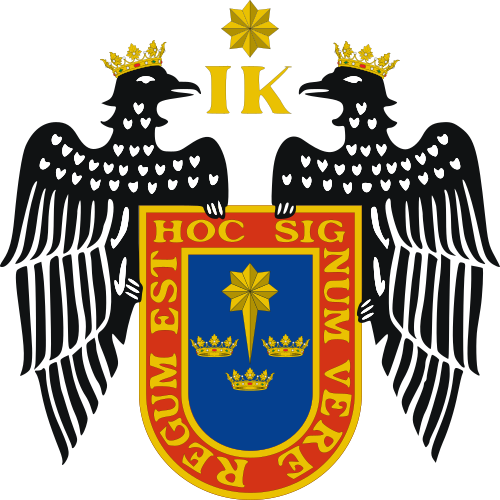
Interesting enough Lima was originally named Ciudad de Los Reyes (City of Kings), in tribute to the arrival of the three wise kings to Bethlehem. The reason for the name was due to the date on which the name was chosen, January 6th, which is the date for the feast of the Epiphany. With time the use of Cuidad de Los Reyes wore off and Lima adopted instead. If you look at the picture of Lima's coat of arms you will notice the 3 crowns in the center. Also on the coat of arms appears the symbols of Spanish King Carlos V and his mother, doña Juana.
Getting back to the announcement though, this Sunday a festival will be held in the Plaza de Armas which will include musical guest performances from Bartola, Guajaja, Julie Freundt, Los Hermanos Zañartu, as well as other recognized Peruvian artists. The music is scheduled to start at 5pm and entrance is free to all who wish to attend. The festival will then finish with a fireworks show that is set for midnight, 17th-18th.
I will definately be attending and I even heard that their will be dance performances of La Marinera, so it should be quite an event. Expect a full review of the event sometime next week.
Posted by
Marco Antonio Mendoza
Sunday, January 10, 2010
0
comments
It's disturbing and upsetting when foreigners come to Peru and vandalize historic and cultural landmarks but it's even more distressing and embarrassing when that same vandalism is committed by it's own citizens. Yesterday the Instituto Nacional de Cultura (INC) or National Culture Institute in the department of La Libertad (where the ruins of Chan Chan are located) filled a legal complaint against four Limeñan students from the district of Los Olivos for vandalism and destruction towards the Chan Chan ruins.
These four pirañitas (spanish for piranhas) were on an end of the year class field trip to La Libertad visiting the Chan Chan ruins where they committed their disrespectful and atrocious acts of vandalism not just to a national landmark but to Peru's heritage (patrimonio). To further prove their lack of overall intelligence and civility the four decided to film their crime (so that later it would be used against them in their up coming trial). The film displays them kicking, writing on the walls and even throwing rocks against the walls murals all while laughing at their despicable act.
In retort (and I'm so heated up right now that I'm not even sure if this is the right context for this word), the Regional Director of INC is determined to sanction all four students as a preventative measure to any future idiots who might find it amusing to vandalize cultural landmarks. The DA or Fiscalia of La Libertad is currently underway in a full investigation of the crime to further determine the rightful sentence and punishment for the four vandalists.
Interestingly enough, a news reporter from Frequencia Latina went to interview on of the parents of the four vandals to get his opinion of the entire situation. What is shocking is his response to the entire crime serves only as an indication to the class of parents that raised the vandals. The father whose name was not revealed had this to say: "it was nothing more than just a childish prank, and that they just recently learned of the value of the ruins!" Are you KIDDING ME, excuse me but that's total BS (obviously the father is trying his best to cover for his son but fails to realize that his statements reflect poorly on their family)!
According to INC these acts of vandalism and destruction towards the ruins are constant which raises the question "who is protecting these ruins?" If sanctioned (and I really hope they do) these four students could be looking at 3 to 8 years in jail for such crimes towards Peru's national and cultural landmarks. I know I am personally crossing my fingers.
below is the video that was placed on YouTube by one of the students that shows the acts of vandalism.
It's also important to know that when the students were caught and charged with their crimes their laughter changed to fear as they tried to make amend their wrong doings with a simple "were sorry, honest we are!"
Posted by
Marco Antonio Mendoza
Friday, January 8, 2010
0
comments
so I am currently working on a little project where each month I will chose a photo to be converted into the Inti Aperture banner. To kick start this project I have chosen a photo that was taken yesterday during an urban trek I did with my family in Downtown Lima.
Here is what the new banner will look like:
This is the general idea for the new monthy banner project, and NO they won't all include me in them! This just happens to be a new favorite of mine
Posted by
Marco Antonio Mendoza
Thursday, January 7, 2010
0
comments
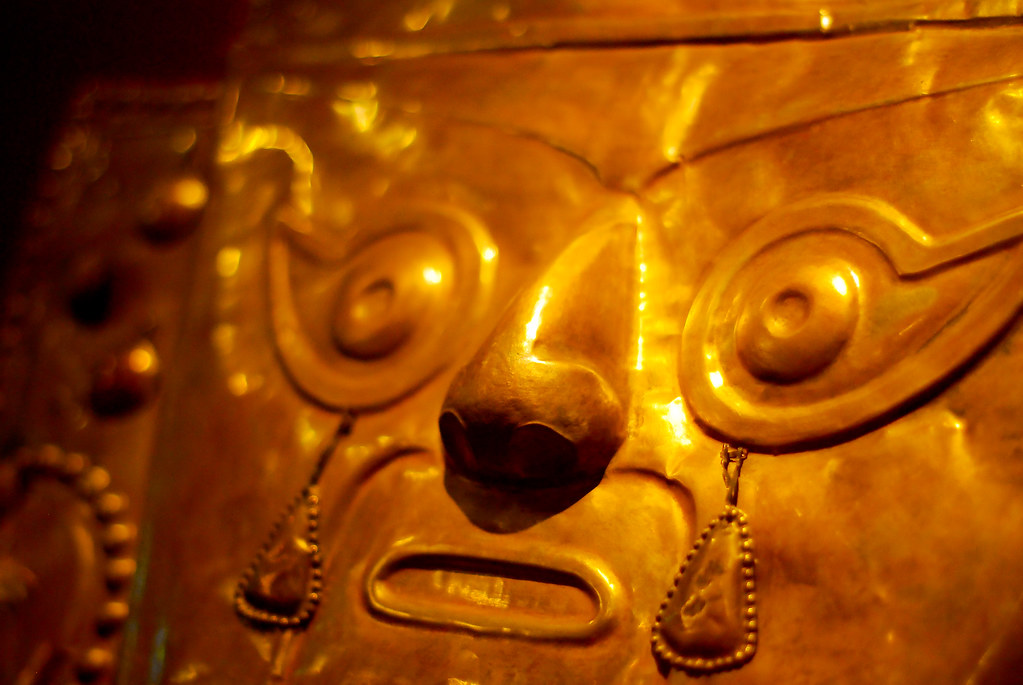
Gold (Au for you science geeks) a precious metal whose bright lustrous shine which has symbolized wealth and value has captivated man for centuries. A natural resource so malleable and ductile it's been used took create everything from coins to being used to plate Nintendo Wii's!
The Incas along with other Peruvian indigenous groups used gold to fashion several beautiful items which would later be the prized possessions of the Spanish Conquistadores. Their artifacts were so articulate and ornate that they managed to travel the world.
Today those artifacts which represent the best of several indigenous groups from Chimú to Nazca are on display in the Tupac Amaru Parlor Room within the Presidential Palace (AKA: Palacio de Gobierno, located in the Plaza de Armas in Downtown Lima). The Exhibit which is currently on display is being presented by the Central Reserve Bank of Peruand the Hugo Cohen Gold Collection. The exhibit is open to the public and best of all it is FREE! Photography is allowed as long as flash is not used.
The Exhibit showcases some of the best gold artifacts from Mr. Cohen's personal collection, what makes the exhibit even better is the location chosen. The Presidential Palace is rarely opened to the public which makes for a great added bonus for those curious about what the palace looks like from the inside and those who love great architecture.
If your in Lima I highly encourage you to go and visit the exhibit it is well worth it.
A travel blog about living abroad in Lima, Peru and my travels to cities like Cuzco and Machu Picchu. Inti Aperture is a blog about travel, Peruvian food, culture, adventure, jobs, tourism, travel, news, teaching English, photography, and living abroad, making it a perfect resource for the traveling expat. Visit Peru!
Bienvenidos!
Un buen lugar para practicar ingles. Articulos sobre Peru, en ingles y escritos por un Americano viviendo en Lima. Todo lo que tu quieres saber sobre Peru en un solo sitio: experiencias, historias, recommendaciones de restaurantes, bares, y clubs, videos, consejos, recursos, guías de turismo, fotos de Peru, comidas tipicos del Peru, cultural Peruano, noticias de Peru, lugares y destinos turisticos, viajes en Peru, hasta SEXO....bueno todo menos eso... :)